A Tale of Two Counties—and Three More
Why Northern Michigan’s housing market changes when you cross a county line
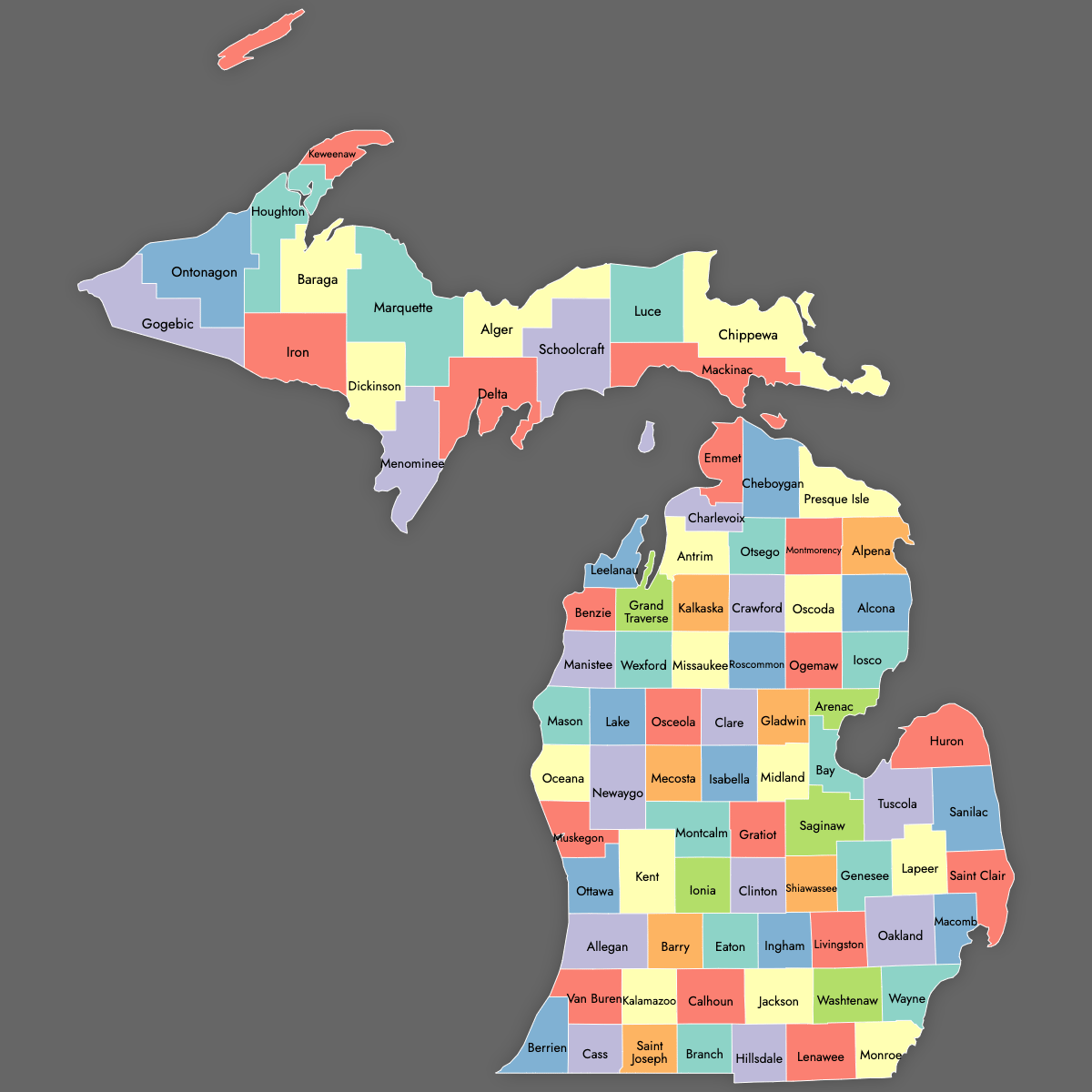
We often talk about the Northern Michigan housing market as though it were a single market. It isn’t. Cross a county line and the buyers, housing stock, price pressures, and reasons people purchase can change considerably.
The latest sales figures from neighboring Grand Traverse and Leelanau counties show just how pronounced those differences can be. Grand Traverse now has 5.1 months of inventory—the closest it has come to a buyer’s market in quite some time. Across the county line, Leelanau continues to hold near three months of inventory, balanced but leaning toward sellers, while its average sold price has crossed the $1 million mark.
The difference is not simply that homes cost more in Leelanau County. County lines are more than boundaries on a map, and the communities within them are shaped by more than municipal rules. They reflect different populations, economies, housing needs and collective decisions about growth. Over time, those differences influence who buys, what gets built and how property is valued.
Those differences did not begin with this year’s housing inventory. They were shaped over generations by the land, the people who settled it, the industries that grew there and the choices each community made about development.
Grand Traverse became the region’s center for employment, healthcare, education and services. Leelanau retained a landscape rooted in agriculture, small villages and tourism. The surrounding counties developed identities and economies of their own. Each offers something the others cannot, and each depends to some degree on the rest.
Grand Traverse: The Regional Center
Grand Traverse County has the region’s most diversified economy and its largest concentration of year-round services. Munson Medical Center, Cherry Capital Airport, Northwestern Michigan College, major retailers, professional services and a growing base of manufacturing and skilled-trade employers make it the economic center for residents well beyond its borders.
Its housing market must serve an equally varied population: families, students, healthcare workers, retirees, professionals, seasonal residents and people moving into or within the region. It also offers the greatest variety of housing, from downtown condominiums and suburban neighborhoods to farms, lake homes and small recreational communities.
Traverse City receives most of the attention, but it is only one part of the county.
Interlochen sits among lakes and state land and is home to one of the country’s foremost arts institutions. Since 1928, Interlochen Center for the Arts has brought students, faculty, performers and audiences from around the world to a community that otherwise retains the feel of a small Northern Michigan lake town.
Kingsley offers good schools and a rural setting shaped by farmland. It has fewer restaurants, shops and entertainment options than communities closer to Traverse City, but for many residents that is an acceptable exchange: live in a smaller community and drive to Traverse City when work or recreation calls.
Fife Lake offers something different again—a compact village, public beach, boat launch and access to an inland lake at prices that have often been more attainable than those near Traverse City or the bays.
Grawn and Blair Township function more like extensions of the Traverse City employment area. Housing, industry and commercial development share the landscape, and residents generally look toward Traverse City rather than a traditional village center for many of their daily needs.
These communities remind us that Grand Traverse County is not one housing market either. A buyer may remain within the county while making a significant change in lifestyle, commute, services and price.
Leelanau: A Peninsula Negotiating Change
The differences between Grand Traverse and Leelanau begin with the people who live there—and those who do not live there year-round.
The median resident of Leelanau County is nearly 56 years old, compared with approximately 44 in Grand Traverse County. More than one-third of Leelanau’s residents are 65 or older, and roughly one-third of its housing stock is classified as seasonal or recreational.
Leelanau is also not a self-contained economy. Grand Traverse supplies many of the workers and services that allow Leelanau’s communities, businesses and tourism economy to function. People routinely cross the county line for employment, healthcare, shopping and other everyday needs. The two counties are closely connected, but they do not serve the same population—and their housing markets reflect that difference.
Leelanau’s story begins with agriculture. Families who have worked the land for generations established the orchards and farms that still define much of the peninsula. Cherries may be the crop most closely associated with the county, but its farms also produce apples and corn. Grapes have become increasingly prominent as vineyards and wineries have expanded both the county’s agricultural base and its tourism economy. Michigan produces the majority of the nation’s tart cherries, and Northwest Michigan remains the center of that production.
That history now meets a newer population of retirees, second-home owners, snowbirds and residents who arrived from elsewhere. Many are drawn by the same features longtime families have worked to preserve: open land, shoreline, small villages and the absence of large-scale development.
The relationship between those groups is not always comfortable, and there are understandable reasons for the tension. Long-established families have watched agricultural land acquire a development value that may bear little relationship to what it can produce. New residents arrive with greater purchasing power and sometimes different expectations about growth, land use and public services. Retirees and seasonal residents support restaurants, shops and cultural amenities, but they do not necessarily add workers to the local economy.
Leelanau has made deliberate choices about its character. Large national hotel and fast-food brands that dominate many tourism markets are largely absent. Visitors stay in small inns, eat in independently owned restaurants and shop in businesses whose owners may also be their neighbors.
Those choices help protect what people value about the peninsula. They also limit development and contribute to an economy in which many of the people serving visitors and residents cannot afford to purchase a home nearby.
Leelanau’s housing market reflects all of these competing pressures: productive agricultural land, limited inventory, an older population, second-home demand, outside purchasing power and a strong preference for preserving the county’s existing character.
A Landscape Older Than Its County Lines
County lines are relatively recent additions to a landscape that the Anishinaabek inhabited and stewarded long before Northern Michigan was divided into municipalities. The Grand Traverse Band remains an important economic and governmental presence across the region, while its treaty rights continue to shape the stewardship of inland and Great Lakes resources.
Its influence also crosses the county boundaries that organize the rest of this discussion. Headquartered in Peshawbestown, the Grand Traverse Band serves tribal members across a six-county area and operates major hospitality and gaming enterprises in Leelanau, Grand Traverse and Benzie counties. Collectively, those enterprises make the Band one of the region’s larger employers. It is another reminder that Northern Michigan has always functioned as a connected region, even when our maps suggest otherwise.
Looking Beyond the Two Headline Counties
Leelanau and Grand Traverse receive much of the attention, but they are not the only choices for someone who wants to live near water, recreation and the services of Traverse City.
Benzie County
Benzie offers Lake Michigan, Crystal Lake, rivers, trails and the southern reaches of Sleeping Bear Dunes National Lakeshore. Its villages and lake communities have identities of their own, and its housing has generally remained more attainable than comparable property in Leelanau.
Lake Ann deserves particular consideration. It has a recognizable village center, public lake access, nearby trails and a strong sense of community, yet it remains within a reasonable drive of Traverse City. For a buyer who wants a small-town setting without becoming disconnected from the regional employment center, it can offer a compelling middle ground.
Frankfort is one of Benzie County’s strongest draws. It sits directly on Lake Michigan—“big water,” rather than an inland lake or protected bay—and combines a public beach, harbor and walkable downtown. It offers a genuine year-round community as well as the scenery and recreation associated with a Lake Michigan destination.
Frankfort, Beulah and the Crystal Lake area serve different buyers and price points, so Benzie should not be treated as one uniform bargain market. Waterfront and resort demand still matter. Even so, buyers willing to cross the county line may find options that are increasingly difficult to locate in Leelanau.
Antrim County
Antrim can feel like two counties—or perhaps several—contained within one boundary.
Elk Rapids is closely connected to the Traverse City area and offers a genuine downtown, Lake Michigan access and an established year-round community. Its desirability is reflected in its housing prices.
Alden is smaller and closely identified with Torch Lake. Its appeal comes from the water, scenery and village scale rather than access to a large employment base.
Bellaire gives Antrim a year-round village center surrounded by lakes, farms, breweries, outdoor recreation and resort activity. Residents and visitors can find restaurants, shops and community life there without directing every trip toward Traverse City.
Move away from these villages and waterfront areas, however, and Antrim becomes far more rural. Housing, services and buyer expectations change considerably within the same county.
Kalkaska County
Kalkaska offers forests, trails, inland lakes, larger parcels and some of the region’s most attainable housing. It attracts buyers who place land, recreation or affordability above immediate access to shopping and entertainment.
Its residents also have the longest average commute among the counties discussed here—nearly 30 minutes—which suggests that many depend on jobs elsewhere. Kalkaska may not provide all the employment and services its residents need, but it expands the range of places where people working within the regional economy can live.
That role matters. A region cannot function if every community competes for the same high-end buyer while the people who work in its hospitals, schools, restaurants, shops and service businesses have nowhere within reach to buy a home.
One Region, Different Ways to Live
These county distinctions matter when choosing a home.
A buyer who wants restaurants, healthcare, employment and an airport close at hand may accept the traffic, density and pricing of the Traverse City area. Someone who values agriculture, shoreline and village character may choose Leelanau while accepting limited inventory and greater dependence on another county for services.
Others may discover that Lake Ann provides the community and water access they want, that Fife Lake offers a recreational lifestyle within commuting distance of Traverse City, or that Bellaire supplies a village center without requiring them to live near the region’s busiest corridor. Buyers seeking land and affordability may find that Kalkaska better fits how they actually want to live.
The better question is not simply, “How close is this house to Traverse City?” It is: “What does this community offer, what will I need to leave the county to find, and are those trade-offs right for the way I intend to live?”
Grand Traverse provides the employment and services that much of the region relies upon. Leelanau and Benzie contribute agriculture, shoreline, small villages and tourism centered on the landscape. Antrim connects resort and waterfront communities with a large rural interior. Kalkaska provides forests, inland water, recreation and housing within commuting distance of the regional center.
Their economies and housing markets differ, but none operates entirely on its own.
County lines matter, but Northern Michigan works because people, jobs, services and money cross them every day.
Market statistics: Aspire North REALTORS®/NGLRMLS Market Stats, August 27, 2026. Demographic and housing figures: U.S. Census Bureau, 2020–2024 American Community Survey. Additional background: county planning documents, USDA agricultural data, Interlochen Center for the Arts and the Grand Traverse Band of Ottawa and Chippewa Indians.