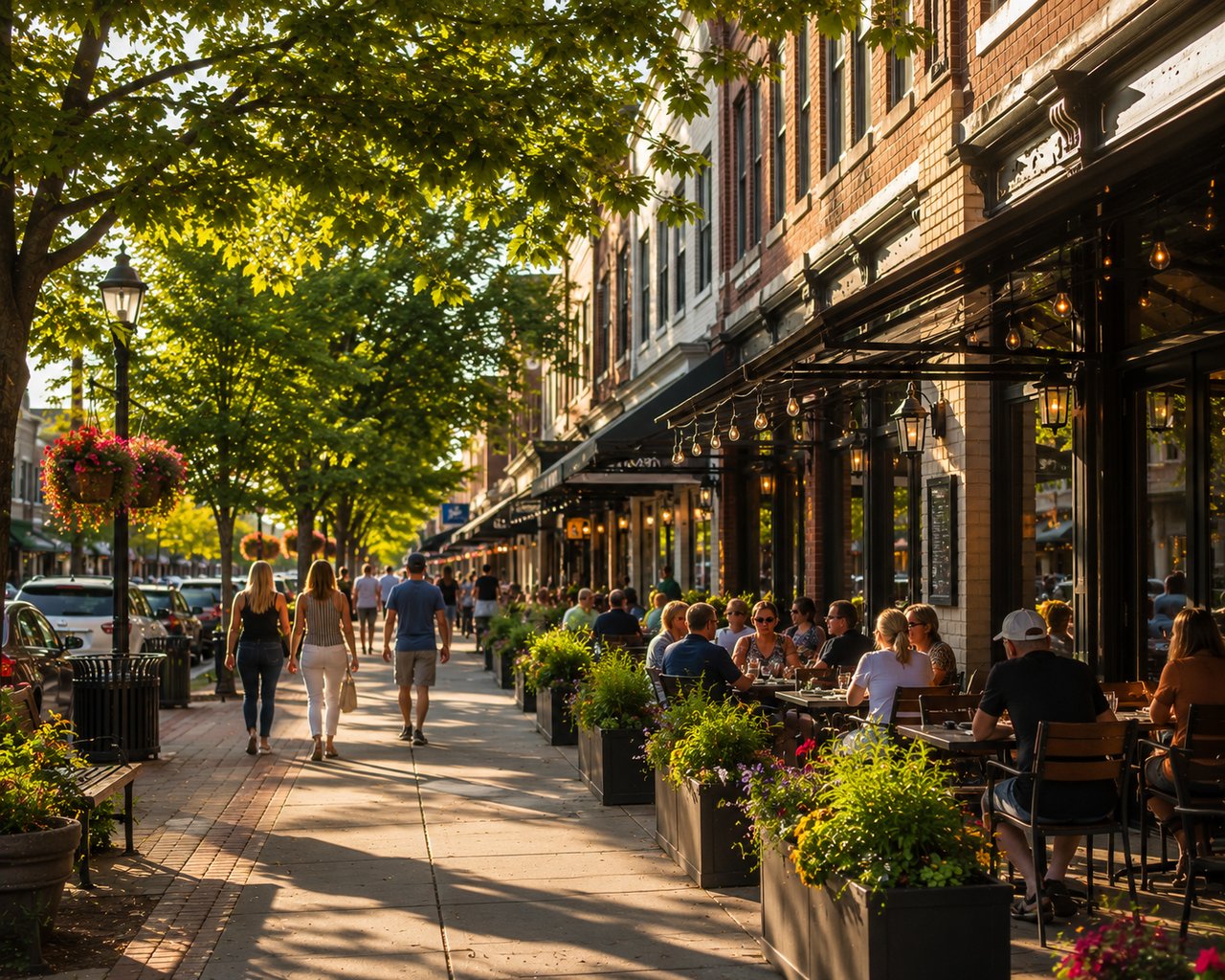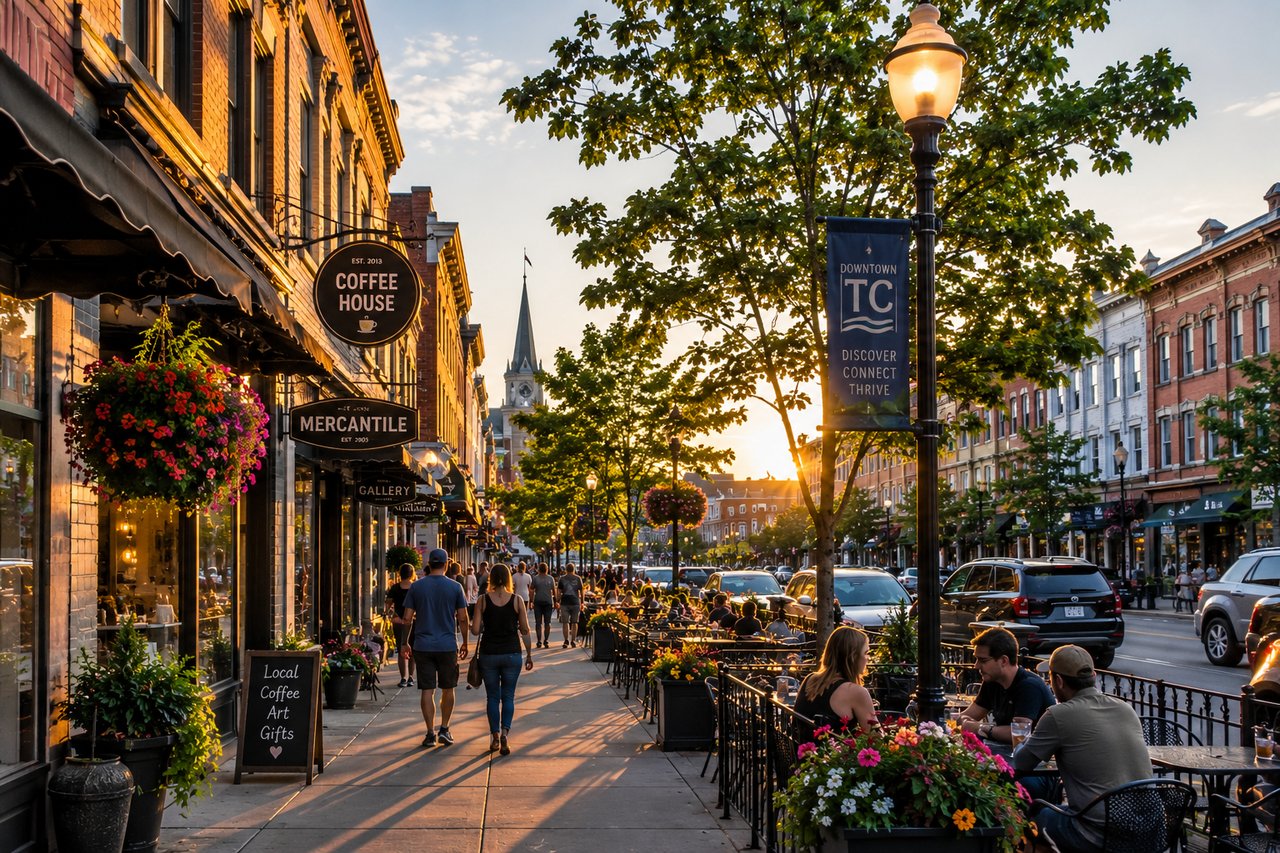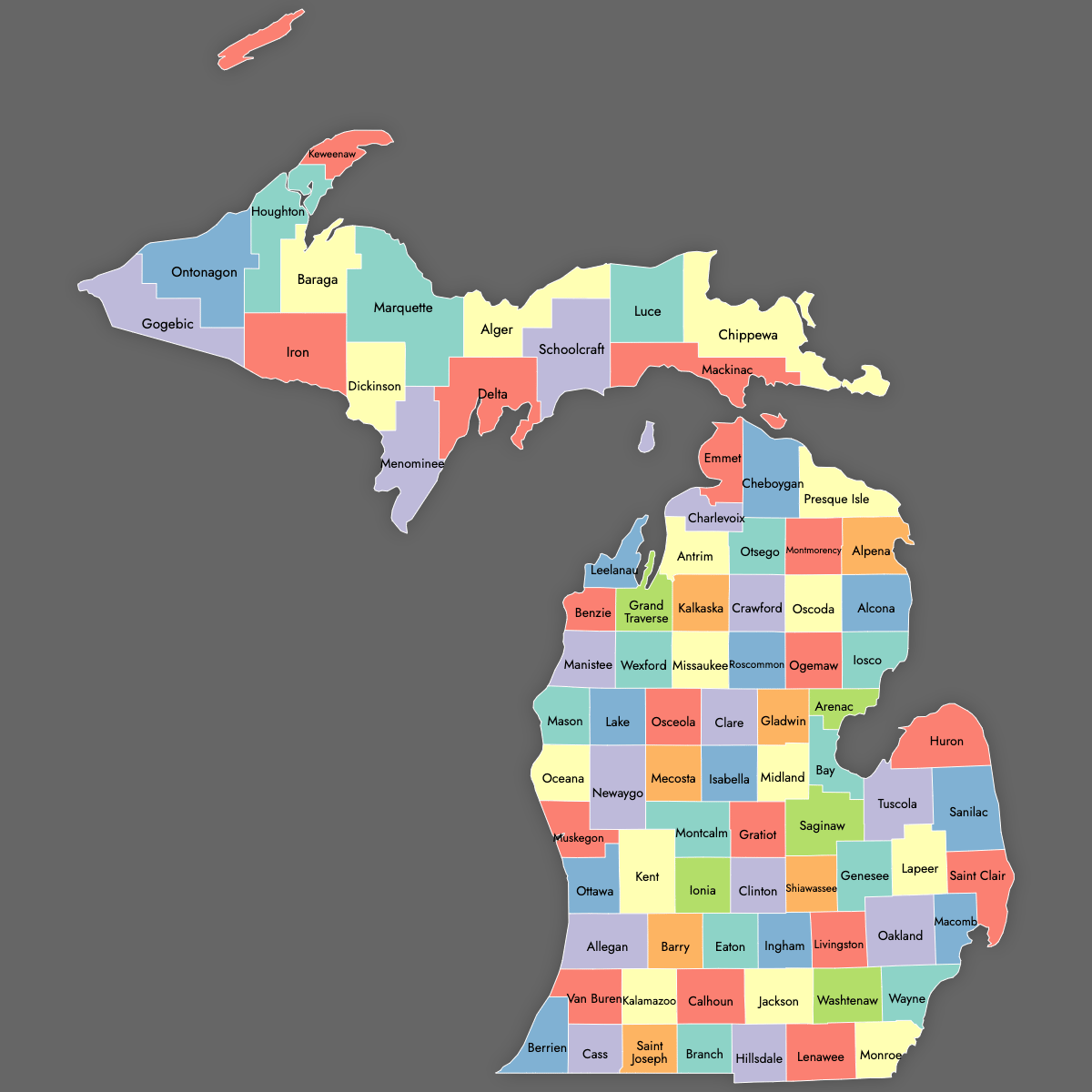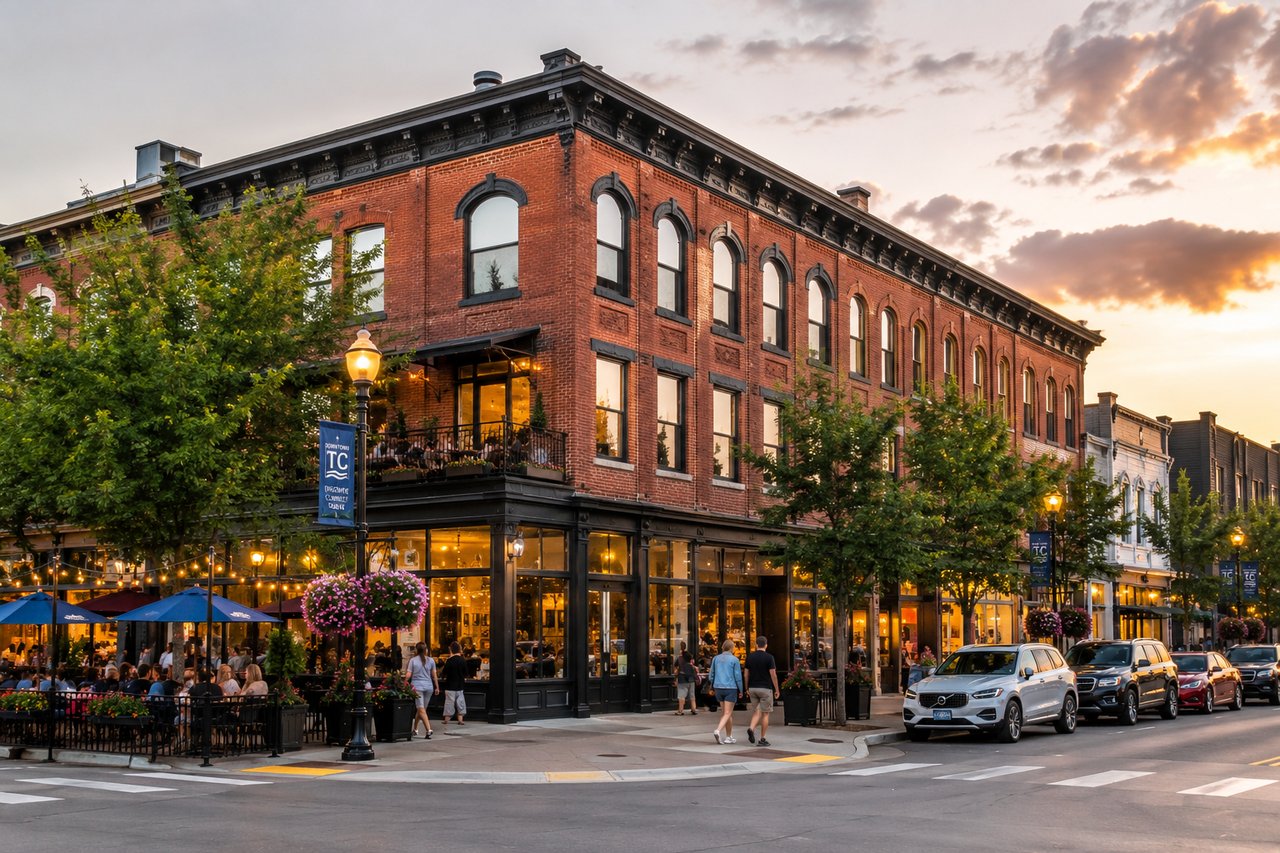
Northern Michigan has always attracted people who value something different. Families remain close—sometimes living in the same house, often within the same neighborhood. It is not unusual for several generations of a family to live near one another, work together, or remain connected through a family business or farm.
Nature is not an occasional escape here; it is part of daily life, protected through conservancies & woven into how people think about the land. Agriculture remains central to the region, especially cherries, and institutions such as the MSU Extension continue to support the farmers who sustain it. For a long time, the commercial real estate market has remained relatively small & subject to strict local control.
That may be beginning to change.
More people are looking toward the Great Lakes region, and Traverse City is receiving increasing attention from buyers and investors outside the area. At the same time, the region needs more housing, local businesses continue to face labor and operating pressures, and communities are deciding how much growth they are prepared to absorb.
The question is not simply whether more capital is coming. The more important question is what that capital will change when it arrives.
More activity may create a more disciplined market, but it will not make Northern Michigan a generic market.
A Small Market Begins to Mature
I expect valuations in Northern Michigan to tighten as more investors enter the market and transaction activity increases. Historically, our commercial market has been relatively small. Outside the hospitality sector, there have often been fewer transactions, fewer useful comparable sales, and less consistency in how risk and potential return are assessed through existing data.
In a market like ours, value can be influenced by more than income and performance. Local familiarity, limited inventory, replacement cost, owner expectations, and even personal attachment can carry more weight than they might in a larger, more active market.
More investors will bring more transactions, but they will look closely at income, operating expenses, financing, capitalization rates, future demand, and exit risk. That should create more price discovery and greater discipline. It may also challenge long-held assumptions about what certain properties are worth.
That does not necessarily mean values will fall. It means values will be tested more consistently. Properties with strong fundamentals may benefit. Properties whose pricing depends largely on scarcity or sentiment may have a harder time supporting the same conclusions.
Housing Is an Important Part of the Commercial Story
Northern Michigan is going to need more housing. That need is already visible, and additional migration will only add pressure. More residents mean more demand for apartments, workforce housing, services, retail, offices, and places for small businesses to operate. Housing should not be separated from the commercial market. It shapes the labor pool, the viability of local businesses, and the kinds of investment that can succeed here.
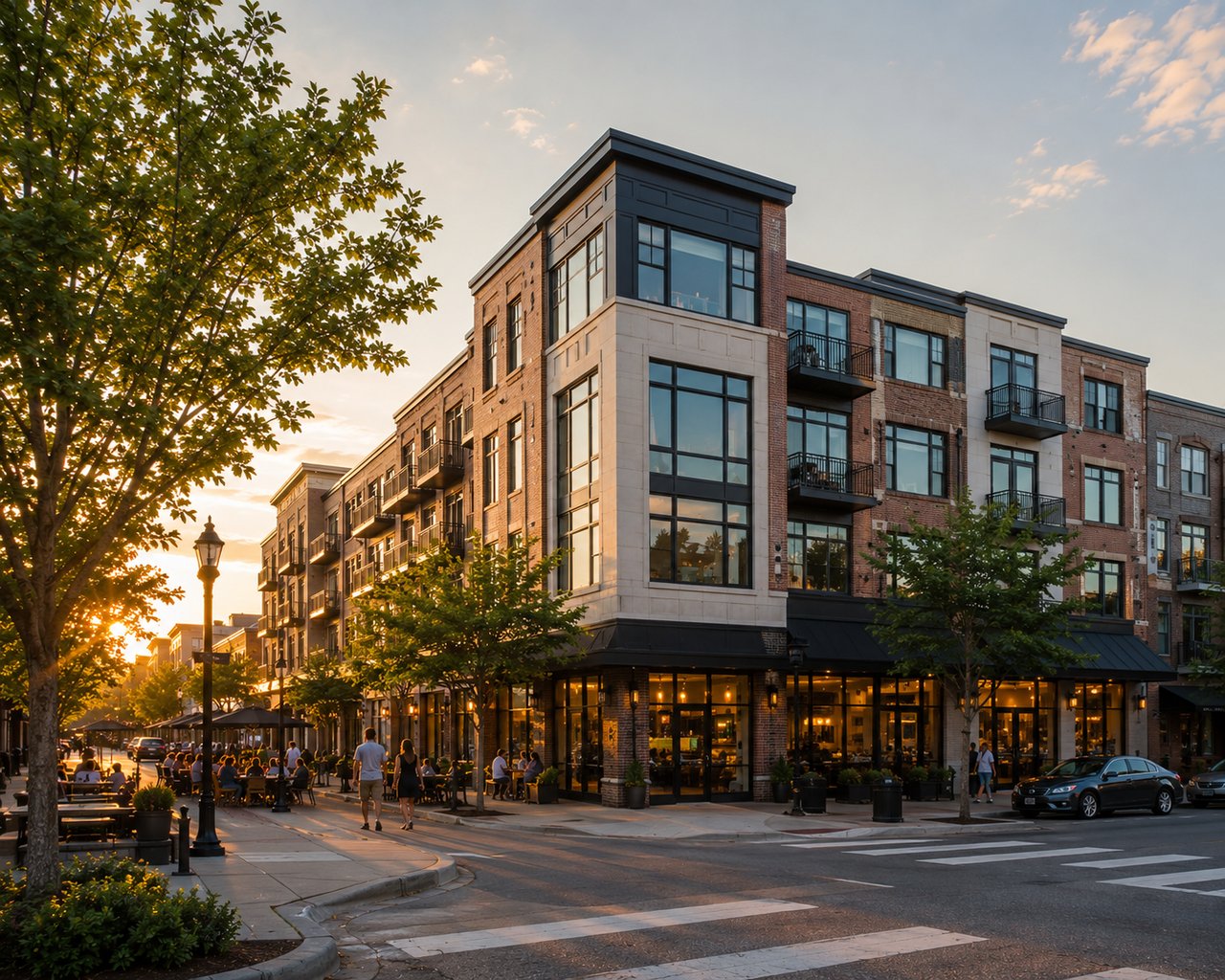
Across the country, mixed-use development has become a more familiar approach to new construction. The appeal is understandable. Housing can support retail and services, commercial uses can create activity and convenience for residents, and the combination can make better use of limited land.
We have mixed-use buildings in Northern Michigan, but they are still relatively scarce. In larger cities and more active development markets, developers routinely combine residential and commercial uses, create separate ownership components, and build more than one path to repayment or exit. Here, that level of intentional mixed-use planning is still relatively new.
Mixed-use development has sometimes faced hesitation from investors because it can be more complicated to finance, lease, and manage than a single-use property. From a risk perspective, however, that complexity can also be a strength. Income from different parts of the rental market—residential, retail, office, or hospitality—can reduce a property’s dependence on any one segment. When one use softens, another may remain stable or continue to grow.
That does not eliminate risk, but it can distribute it more effectively. In a market like Northern Michigan, where seasonality and limited inventory already shape performance, a well-conceived mixed-use property may offer a more balanced income profile than a building tied entirely to one use.
More Than One Way Out
Mixed-use development can also create flexibility when it is time for the developer to exit. Depending on how the project is structured, a developer may sell individual residential condominium units while retaining the commercial portion for rental income or as a work area. The commercial component may be sold separately later, or the developer may choose to retain the entire property.
That creates more than one path to recovering capital.
Residential units can be sold gradually rather than all at once, allowing the developer to respond to demand and intentionally stagger sales. At the same time, retained commercial space can continue producing income while the residential portion is absorbed. In that sense, a thoughtfully structured mixed-use project does not rely on a single tenant category, one source of revenue, or one exit strategy. It creates options, and options have real value in a changing market.
Of course, structure matters. Condominium documents, financing, shared expenses, zoning, parking, ownership arrangements, and management responsibilities all have to support the plan. It is far easier—and usually less expensive—to address those issues during the planning phase. But an existing development is not necessarily locked into its original structure. In some cases, condominium documents and separate ownership components can be created later with the right legal, financial, and development guidance.
However, more thoroughly a project is researched and planned, the more likely it is to succeed. That means understanding not only what can be built, but who will use it, how they will use it, what they can afford, how the different components will interact, and what options the owner may want five or ten years from now.
Mixed-use is not automatically successful simply because it contains more than one use. Its strength comes from thoughtful planning: uses that support one another, income streams that balance risk, and a structure flexible enough to respond as the market changes.
Mixed Use and Placemaking
There is another reason mixed-use matters, and it goes beyond revenue. It can help create places where people want to spend time.
I think about a downtown building I know that could have been an exceptional mixed-use property, complete with commercial space, residential units, and a rooftop deck. The developers instead chose to operate two restaurants in the same building, one above the other. I have often wondered whether a mixed-use approach might have created a more layered property.
Two restaurants in one building concentrate the property in a single business category and ask a similar customer base to support both uses. A residential component above commercial space could have introduced different sources of income, different users, and activity at different times of day. It also could have offered the developer more than one way to hold or eventually sell the property.
More importantly, it might have contributed differently to the life of downtown.
That brings me to placemaking.
I learned about placemaking from one of its early practitioners. Dana Crawford, the developer I worked for in Denver, understood that saving or redeveloping a building was only part of the work. The larger task was creating a place people wanted to inhabit—one that connected history, commerce, architecture, and daily life.
That lesson has stayed with me.
The best development does more than assign a use to a building. It begins by asking who the natural inhabitants of a place are, how they already use it, and what could be added to complement the life they are already living. So the question is: Who are we making this place for?
Traverse City as a Liminal Space
I think Traverse City may be entering what anthropology describes as a liminal space: a period of transition in which the established way of doing things still holds influence while the next version of the market is beginning to take shape. Liminal spaces are often harbingers of change.
Here, that change may appear through tighter valuations, more disciplined underwriting, greater housing demand, and growing pressure on assumptions about land, use, and opportunity. But the change will not happen in a vacuum.
Northern Michigan has its own culture around how relationships are formed, how trust is built, and how projects move forward. People who come from downstate or other parts of the country are often called “move-ins.” It can take time to understand the networks and unwritten practices that shape the market.
I know that experience from both sides. I have been here long enough to shed most of the move-in stigma, but not so long that I have forgotten what it feels like to navigate the market from the outside.
That is one reason incoming investors often gravitate toward brokers, attorneys, lenders, contractors, and other professionals who have been here for a while. They are not only looking for someone who can identify a property. They need people who understand the history, the relationships, the process, and the realities that may never appear in an offering memorandum.
Zoning Is Local—and Intentionally So
Zoning across the region is not uniform.
Each township, village, and municipality has its own priorities, and many have written land-use rules around what they are trying to preserve as much as what they want to encourage.
For an incoming investor, that can be frustrating. A project that looks possible in one community may be restricted, reshaped, or impractical only a few miles away. Investors accustomed to larger markets may expect more predictability, greater scale, or a faster path through approvals.
However, there is real value in local control.
It has helped preserve agricultural land, support small businesses, and prevent development that does not fit the character of a community. In the county where I live, local rules have kept out big-box stores and fast-food chains. That may limit certain types of investment, but it is also part of why the area still feels like the place people wanted to move to in the first place.
As more capital enters Northern Michigan, the tension will become more visible. Investors will want clarity, speed, and scale. Communities will want to protect the qualities that made the region attractive.
The best opportunities will not come from imposing the same development model everywhere. They will come from understanding what each community is prepared to support and finding uses that can succeed without erasing what already works.
What We Will Be Watching
The next phase of this market will be shaped by more than population growth or a few high-profile investments. We will be watching whether lifestyle migration becomes sustained year-round demand, how quickly housing supply responds, and where new housing is permitted.
We will also be watching whether increased transaction activity produces more reliable valuation benchmarks, how local zoning shapes development patterns, and which existing properties can be repositioned without losing the character of the place.
Northern Michigan is changing.
That change may bring more capital, more housing, more activity, and a more mature approach to valuation. It may also create friction as new expectations meet established culture and local control.
The opportunity will belong to those who can see both sides clearly: the numbers and the place, the investment and the community, the need for change and the value of what should be preserved.
That is the work ahead—not simply finding where growth is possible, but understanding where it can honestly serve Northern Michigan- today and in the future.